Launching3 min read
Hand-drawn vs generative art
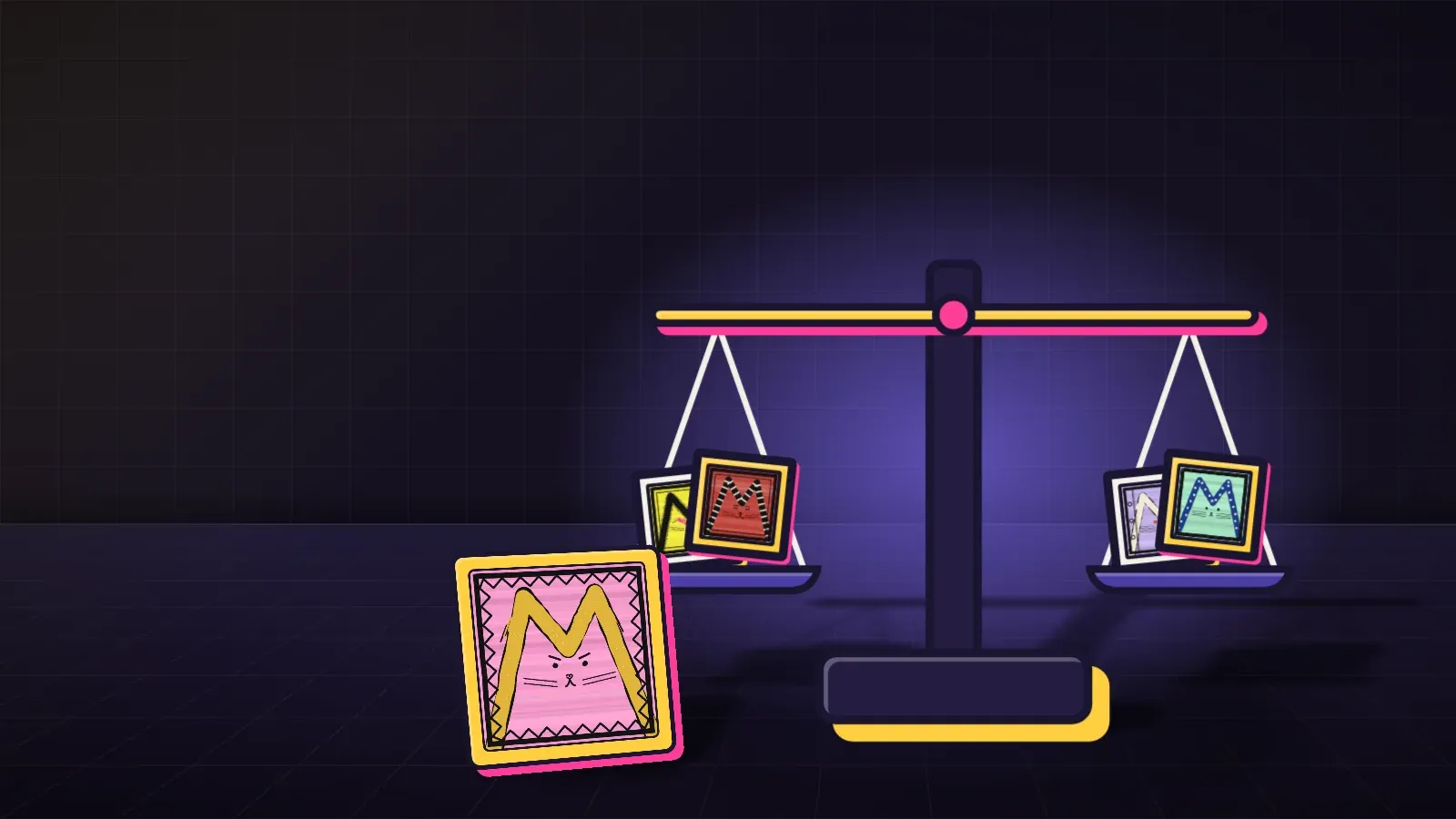
Generative doesn't mean machine-made. How hand-drawn layers, finished one-by-one art and generative builds differ, what each asks of a creator, and how to choose a way in on KURV.
KURV teamAlso in Español, Português (Brasil)
On this page11 sections
“Hand-drawn or generative?” sounds like a choice between art and machines. It isn’t. Most generative collections start with hand-drawn art. The real difference is how the pieces get made from that art. On KURV, that difference maps to two ways in: layers and finished art.
Three ways to make pieces
- Every piece drawn as its own image. You draw piece 1, then piece 2, and so on. On KURV, that’s finished art: an art folder plus metadata.json.
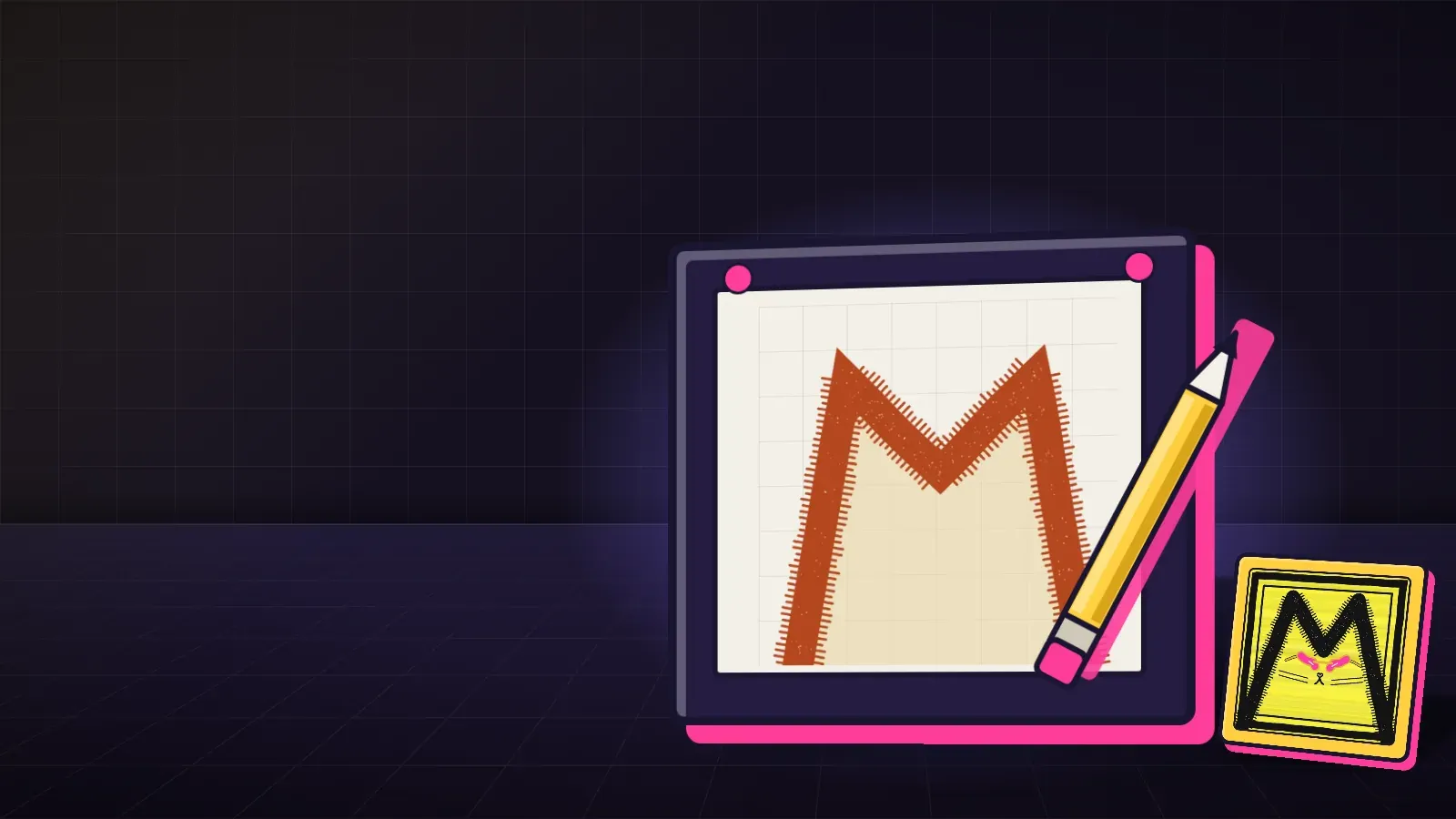
- Hand-drawn layers, combined by software. You draw each trait by hand (every hat, every pair of eyes), and KURV stacks one trait from each layer to make every piece. That’s the layers way in.
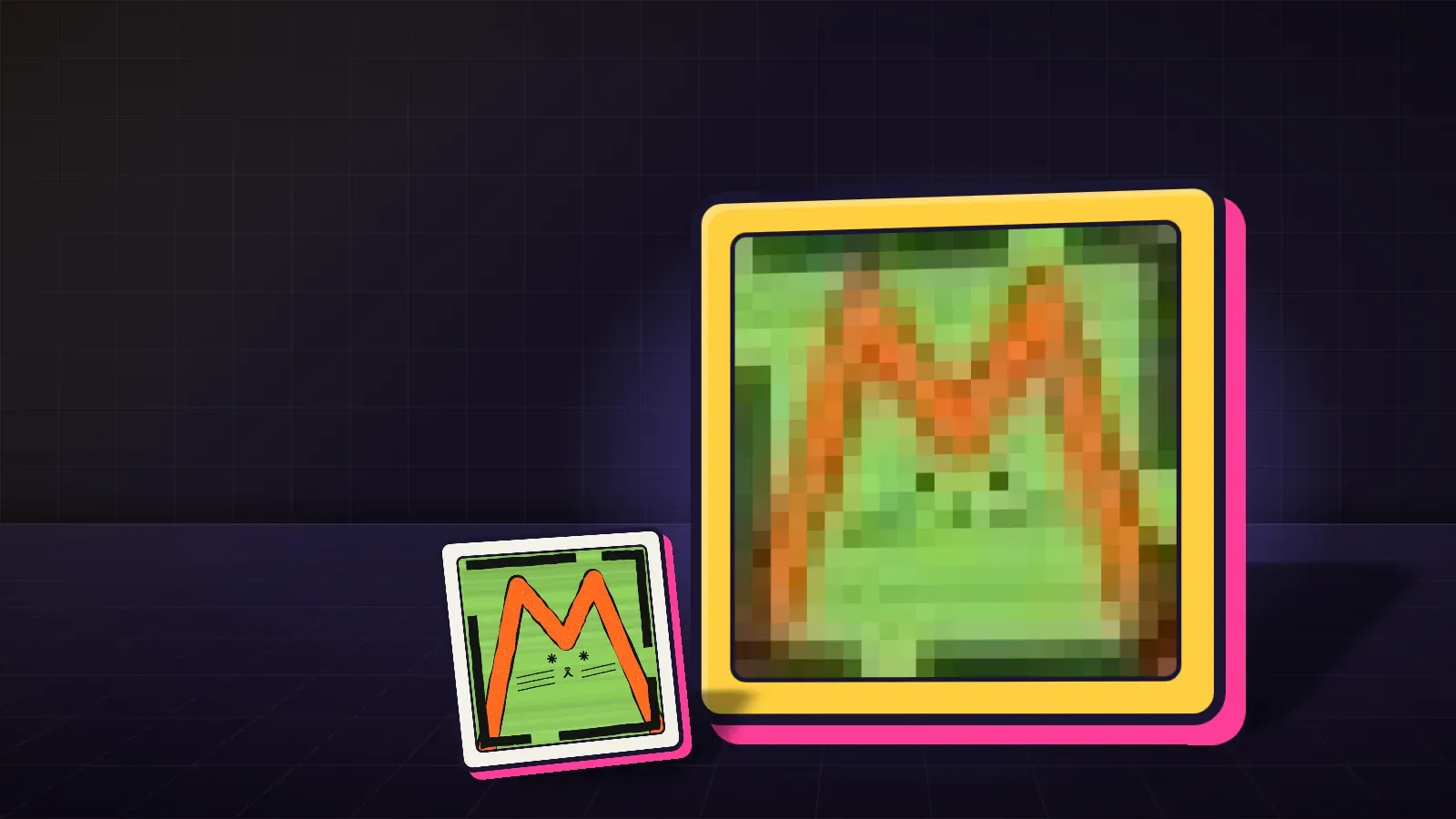
- Fully code-made art, where a program draws shapes from rules. KURV’s layers flow doesn’t need this; it’s a different kind of generative art.
So “generative” on KURV usually means hand-drawn traits, combined automatically.
Max Cat: hand-drawn and layered
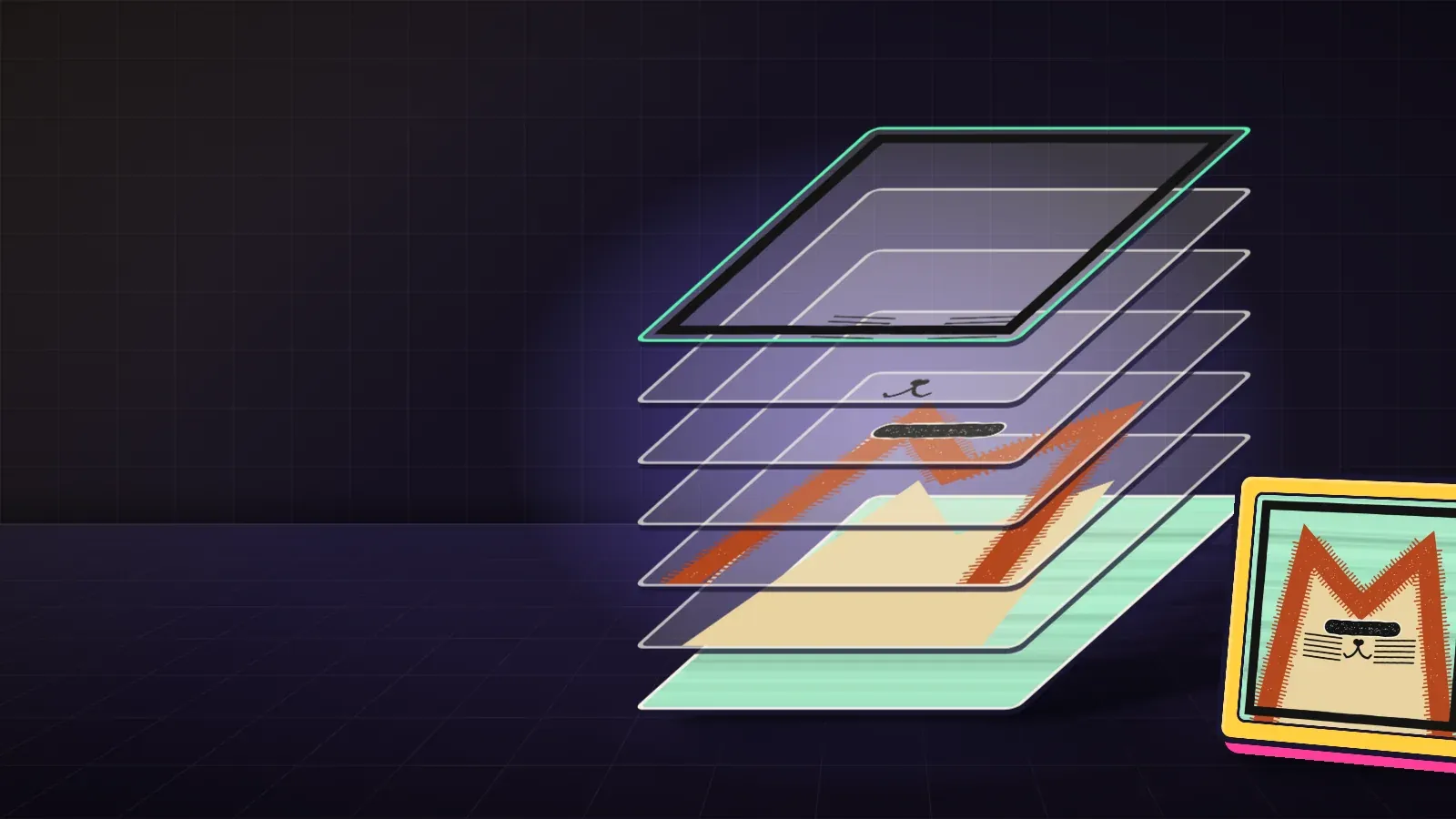
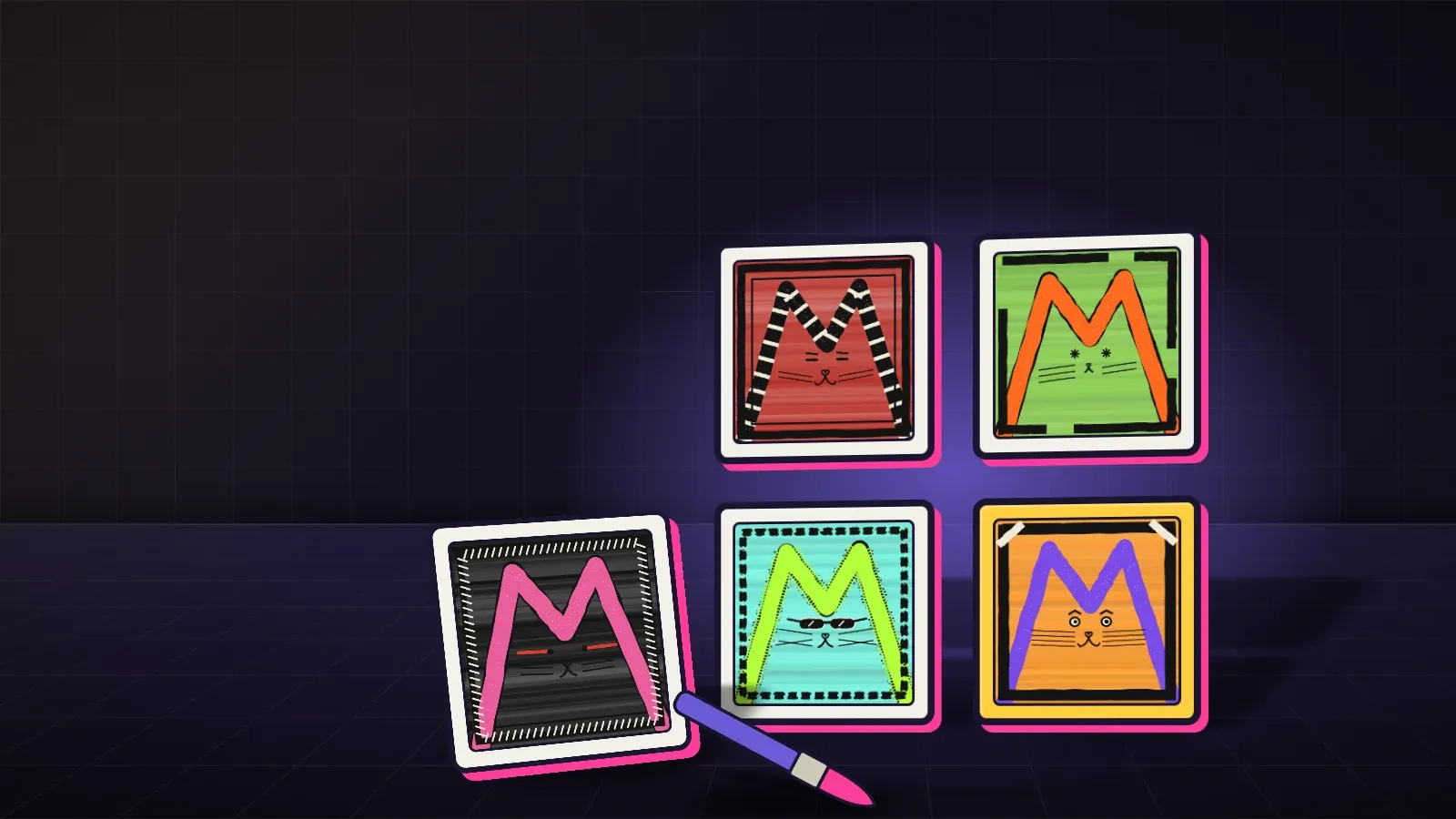
Max Cat, Charvel’s first KURV collection, is hand-drawn and built from seven layers, back to front: Background, Fur, Head, Eyes, Nose, Whiskers, Frame. Every trait was drawn by hand; KURV combined them into cats. The homepage animation on kurv.fun takes one finished cat apart into those seven layers, which shows exactly how it works.
What each approach asks of you
Finished art
- Time per piece. Every image is its own drawing.
- Freedom. Each piece can have a different pose, scene or idea.
- Metadata by hand. You write the metadata.json.
- Best for: smaller sets, one-of-a-kind scenes, art that can’t be split into parts.
Hand-drawn layers
- Time per trait. You draw the parts once and they’re reused across pieces.
- Consistency. Pose and framing stay the same so traits line up.
- Planning. Traits must fit together in every combination.
- Metadata built for you from layer and trait names.
- Best for: larger sets of characters sharing a pose.
A worked example
Ana wants a collection of frogs. She sketches a scene with a frog fishing, another reading, another asleep in the rain. These are different scenes with different poses, so they can’t share layers. She goes with finished art and a small supply.
Leo wants a crew of cats with different hats, eyes and moods. They all face the same way. He draws six layers of traits, builds them in Studio, and gets many distinct cats from a few dozen drawings.
Choosing, step by step
- Sketch three pieces. Do they share a pose and framing?
- If yes, try splitting one into layers. Does it still look right when parts swap?
- If no, finished art is probably the right way in.
- Think about supply. Many pieces usually favor layers; a few favor finished art.
- Build a test in Studio, which runs in the browser for free.
Being honest about how it was made
Collectors care about process. Say clearly how your collection was made: “every trait hand-drawn, combined on KURV” or “each piece drawn individually”. If you used AI tools anywhere, say so too; Using AI tools in your art, honestly covers that.
Mixing the two
Some creators combine both: a layered main set plus a few hand-finished special pieces. If you do this with finished art, every piece needs its own metadata. Keep the style consistent so the special ones still belong.
Time, honestly
A rough way to compare effort: with finished art, work grows with the number of pieces. With layers, work grows with the number of traits, plus the time spent making them fit together. A layered set of many pieces might need a few dozen careful drawings; a finished-art set of the same size needs one drawing per piece. Neither is easier; they’re hard in different places. Layered work front-loads planning, and finished art spreads effort across every piece.
Common mistakes
- Calling layered art “not hand-drawn”. If you drew the traits, it’s hand-drawn.
- Choosing layers for scenes that need different poses.
- Choosing finished art for a big set you can’t realistically draw.
- Not saying how it was made.
- Assuming one method is more valuable. Collectors decide what they like.
FAQ
Is Max Cat generative? It’s hand-drawn and built from seven hand-drawn layers that KURV combines.
Do I need code to make a generative collection on KURV? No. Bring folders of layers and KURV builds the pieces.
Can a finished-art collection have traits? Yes. You define them in metadata.json.
Which is better? Neither. Pick the one that fits your art.