The Vault4 min read
The Vault, explained simply
Every collection launched on KURV has a Vault. What fills it, how a sell-back works, and the four numbers people mix up: Market Floor, Vault Backing, Vault Exit and Vault Inventory.
KURV teamAlso in Español, Português (Brasil)
On this page8 sections
Every collection launched on KURV has its own Vault. It’s the thing that makes KURV a bit different from other places to mint, and it comes with four numbers people mix up all the time. Here’s what it is, what fills it, and how to read it without fooling yourself.
The short answer
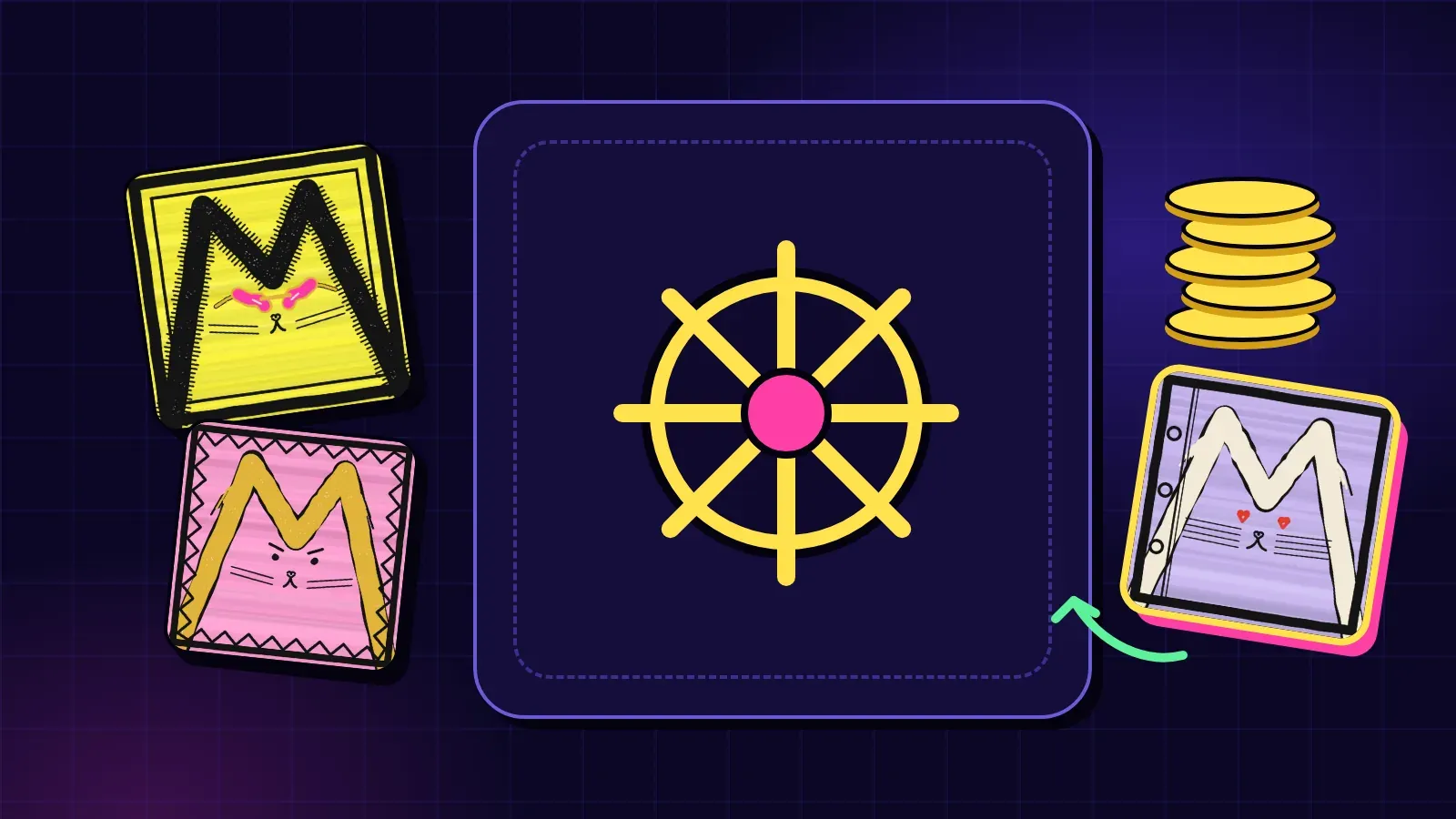
A Vault is a pool of money and pieces that belongs to one collection and serves only that collection. It:
- holds that collection’s backing: coins set aside behind the pieces
- buys pieces back from holders who want out, whenever it holds money
- keeps each returned piece as inventory
- can sell that inventory again
The backing belongs to the collection. Per KURV’s docs, fees that KURV and the creator have earned are held separately, and “nobody at KURV can move a Vault’s backing.”
A Vault can hold $0, and that’s normal
This is the first thing to get straight. The creator decides how much of each mint goes into the Vault, from nothing at all. A creator who keeps the whole mint, or who launches a free collection, starts with an empty Vault on purpose.
So every Vault is in one of two states, and the collection page shows which:
| State | Can you sell back? |
|---|---|
| Holding $0 | Sell-back is offered, and it pays once money is booked into the Vault |
| Funded | Sell-back pays: the Vault will buy back a piece you hold today |
An empty Vault doesn’t mean anything’s broken. It’s an ordinary state for a new collection.
What fills a Vault
| Source | What reaches the Vault |
|---|---|
| A paid mint | Whatever’s left after KURV’s 5% and the creator’s share. The creator picks 0 to 100% of the remaining 95% |
| A Vault top-up | If the part of a mint price reaching the Vault is below the current backing per piece, the buyer adds the difference |
| A sale between collectors on KURV | 25% of the royalty |
| A sell-back | The 10% of backing the Vault keeps, plus its 25% of the royalty |
| A Vault resale | The sale price, minus the creator’s and KURV’s royalty shares |
The Vault’s share of a trade counts toward its numbers once it’s booked, which happens at the next mint or Vault sale.
Example ($100 paid mint): KURV takes $5. If the creator keeps 50% of the $95, then $47.50 goes to the creator and $47.50 goes into the Vault. At a 100% creator share, nothing reaches the Vault.
The four numbers (keep them apart!)
KURV’s glossary says confusing these is “the single easiest way to lose money on any NFT site.” So slowly:
- Market Floor: the lowest price anyone is currently asking for a piece. Collectors set it, and it changes whenever someone lists or delists. It’s the only number KURV calls a “floor,” and KURV makes no promise about it.
- Vault Backing: the money in the Vault divided by the pieces that still have a claim on it. $10,000 behind 100 pieces = $100 of backing per piece.
- Vault Exit: what you’d actually receive today for selling one piece back to the Vault. It’s always smaller than the backing (see below).
- Vault Inventory: pieces the Vault holds after buying them back. They don’t count toward the backing-per-piece math.
The big one: Market Floor and Vault Exit move independently. The docs give an example where a collection has a $500 Market Floor and a $0.50 Vault Exit at the same time. The market is pricing the art; the Vault is showing money actually set aside. Neither is a promise.
How a sell-back works
Say a piece carries $100 of backing. Two deductions come off the full $100, side by side:
- 10%, which the Vault keeps
- the collection’s royalty, which the creator set between 5% and 10%
| Royalty | You receive | Creator | KURV | Stays in the Vault |
|---|---|---|---|---|
| 5% | $85.00 | $2.50 | $1.25 | $11.25 |
| 10% | $80.00 | $5.00 | $2.50 | $12.50 |
Network costs are separate. Your piece moves into the Vault’s inventory, where it can be sold again.
Steps: log in, open your piece, and press Sell to the Vault (or Sell back for $X on its Vault panel). Read “You get, at least,” then confirm and sign. Pieces sell one at a time, and each gets its own quote.
The screen shows the least you’ll be paid. If the Vault moves before your sale goes through and can’t pay that, the sale simply doesn’t happen and the piece stays yours.
What the Vault is not
- Not a guaranteed price. A Vault Exit is a quote at a moment, based on what that collection’s Vault holds right then. It’s not a promise about any later moment.
- Not protection against losing value. A piece can be worth less tomorrow, and a Vault can hold $0.
- Not a “floor.” Don’t call Vault Backing a floor. Only the Market Floor is a floor, and nobody promises that either.
- Not financial advice. Read Risks and disclaimer before you mint, buy or sell back.
For creators: the tradeoff
Your mint share (0 to 100% of the 95%) is the dial. A bigger share pays you more today and puts less in the Vault. A smaller one builds the Vault, which gives your holders somewhere to sell back to. Once you launch, it’s fixed for the life of the collection, so choose on purpose.
Next steps
- See a Vault in action: kurv.fun (scroll to “The Vault”)
- Minting first? How to mint an NFT on KURV
- Making a collection? How creators earn on KURV
- Full detail: The Vault · Sell a piece back · Fees